
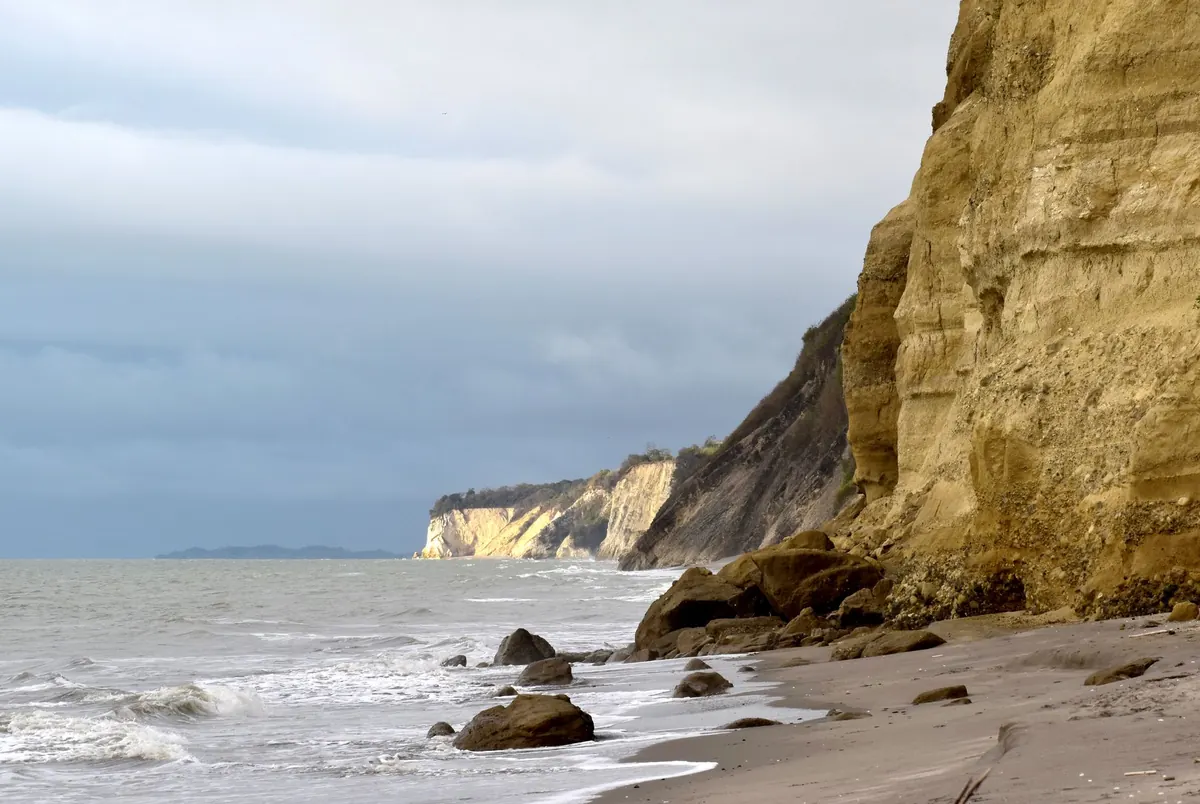



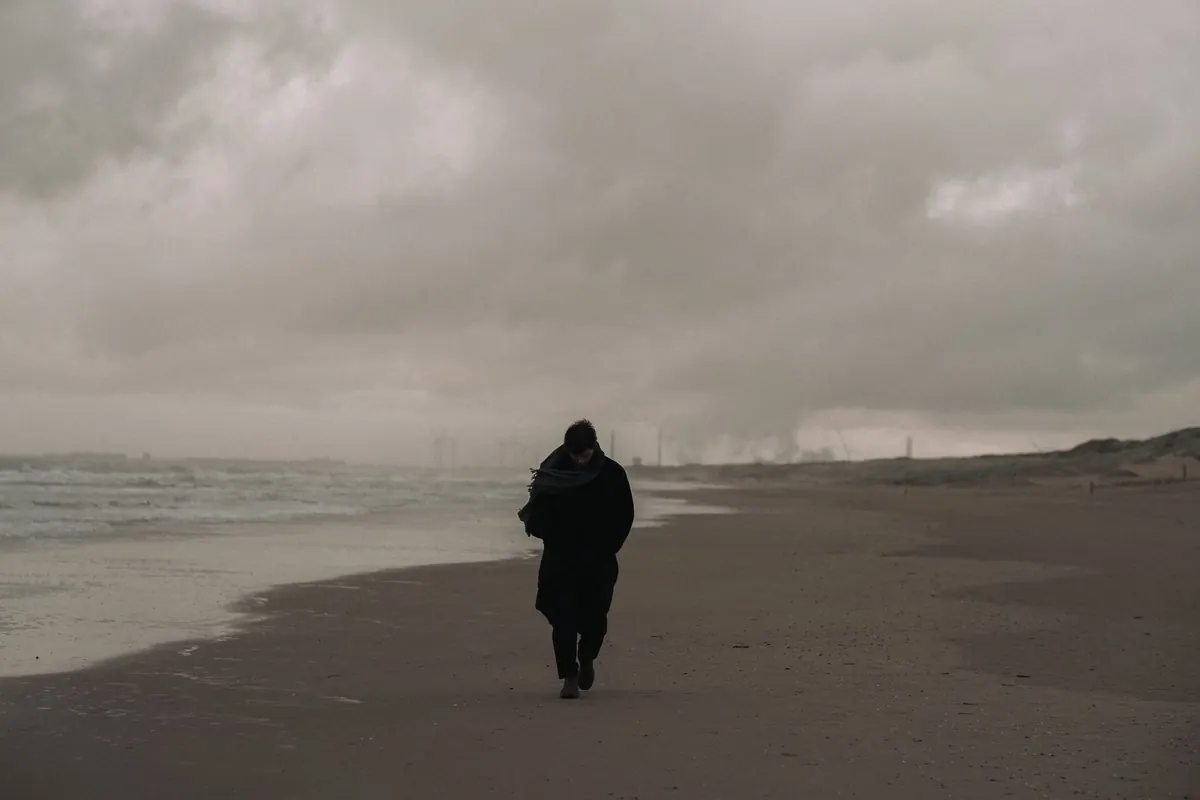
Winter changes a beach. The car parks empty, the sand firms up, and the light comes in low and long across the water. You get the place to yourself, or nearly: a few dog walkers, a couple of surfers in hoods, someone collecting driftwood. What you don't get is forgiveness. Days are short, the wind has an edge, and the tide arrives faster than it seems to in July.
These ten stretches of coast, from Norfolk round to County Antrim, are at their best between November and February. Some need a plan and a torch; all of them reward a bit of homework before you leave the house.
Read the tide table before anything else
On most beaches the tide decides whether your walk is a pleasure or a scramble. It's not just the high-water time that matters: the sea rises fastest in the two hours either side of mid-tide, which is exactly when people get caught on a headland or cut off against cliffs. Free tide tables are widely available from harbour offices, the coastguard and reliable tide apps, and the local one always beats a national one.
Work backwards from high water rather than forwards from the car park. Add an extra hour to whatever time you think the walk will take, and if the route involves a causeway, a spit or a rocky headland, go out on a falling tide and come back before it turns. Signs at the car park entrance are there because someone learned the lesson the hard way.
Ten beaches worth the drive
Norfolk and the North East
Holkham, Norfolk. Park at Lady Anne's Drive and walk through the pines onto flat, firm sand that goes on for miles. Winter empties it out; the wind is the real thing here. Keep clear of the marsh channels and stick to the beach rather than cutting back through the dunes.
Bamburgh, Northumberland. The castle gives you a landmark for the whole walk. Head north towards Budle Bay or south to Seahouses, both easy going on firm sand. The village car park is a short walk from the beach, and a north-easterly will test any jacket.
Filey Brigg, North Yorkshire. A rock promontory with a wide bay behind it. The Brigg is best at low water in calm conditions, and it's slippery when wet, so there's no need to go far along it. Rock pools keep children busy when it's too cold for anything else.
Sussex, Dorset and Cornwall
Camber Sands, East Sussex. Big dunes, wide sand and a huge tidal range. The sea retreats a long way and returns quickly, so don't be tempted to follow it out. The RSPB reserve behind the dunes is a good bolt-hole when the wind gets up.
Hengistbury Head, Dorset. The harbour side is sheltered, the beach side bracing, and you can loop both in one walk from the car park at Double Dykes. The little ferry across to Mudeford Sandbank is seasonal and won't be running in midwinter, so plan to walk rather than cross.
Sennen Cove, Cornwall. A working harbour, a small beach and the coast path climbing north towards Land's End. Winter is for watching the swell from behind the wall rather than swimming; the water is cold and the currents are serious. Dogs and photographers seem to outnumber everyone else.
Wales
Rhossili Bay, Gower. Three miles of sand with Worms Head at the far end. The causeway out to the head is only passable for a couple of hours either side of low tide and it catches people out every year, so read the signs at the National Trust car park before you commit. There is nowhere to hide from the wind.
Scotland and Northern Ireland
Sandwood Bay, Sutherland. About four miles each way from the car park at Blairmore, on a rough track, with no facilities at either end. You get a mile of sand, a sea stack and almost certainly nobody else. Tell someone your route: phone signal is unreliable. The walk is the point.
Luskentyre, Isle of Harris. Machair, dunes and that pale Atlantic water. You reach it by single-track road with passing places, and the winter light is extraordinary when it appears at all. Short days and long distances make this a full-day commitment, not a stop-off.
White Park Bay, County Antrim. National Trust land with a steep path down to a curving sandy bay, sheltered by headlands and backed by dunes. There's no lifeguard cover at any time of year and the currents aren't to be trusted, so walk rather than swim. Parking arrangements change out of season, so check before you go.
What to put in the bag
- A waterproof jacket and overtrousers, not just a showerproof layer. Wind-driven rain on an exposed beach is a different sport.
- Boots or well-fitting walking shoes with proper grip. Wet rock and wooden steps are the usual culprits.
- A head torch, even if you plan to be back by three. Cloud and rain bring the gloom forward by an hour.
- A flask and something to eat. Cafés and beach huts shut from November onwards, and a hot drink changes the mood of a cold walk.
- A paper map or an offline map on a charged phone, plus a power bank.
- Spare socks and a dry bag in the car for wet boots and sandy dogs.
- Coins or a card, because some winter car park machines are the old-fashioned kind.
Access, parking and winter closures
Winter is when barriers are locked earlier, toilets are padlocked and the café you remembered is shut until Easter. Check the landowner's website or a recent review before travelling, and never park in front of a gate, on a passing place or on soft verges — in wet weather you'll either get stuck or churn the ground up for everyone else.
On single-track roads, pull into passing places on your left and let uphill traffic keep moving. If you're walking from a village, remember that residents still live there: keep dogs under control around livestock, shut gates behind you and take everything home with you.
Weather, daylight and staying safe
Plan the day around the light, not the walk. In midwinter there's a workable window of roughly eight hours in southern England and noticeably less in the far north of Scotland, and it shrinks further under cloud. Aim to be back at the car with half an hour of spare daylight and a torch you haven't needed.
Check an inshore waters or coastal forecast as well as a general one; wind direction matters more than temperature on an exposed beach. If the sea is rough, keep well back from the edge of promenades and cliffs, where spray and rogue waves reach further than they look. Tell someone where you're going and when you expect to be back, and turn around early if the weather closes in. There's no shame in a short walk on a grim day.
Before you go
Pick one beach rather than three. Check the tide, the daylight window, the parking and whether the access road is open. Take layers, a torch and a flask, and leave the expectations at home.
Winter walking on the coast is less about bagging a view and more about the hour you spend on an empty beach with the wind at your back. Go when the tide is falling, stay for the light, and you'll understand why so many people count the quiet months as the best ones.
Photo: Alina Chernii / Pexels
Related posts
More stories you’ll love reading