


Stand at the end of a coastal garden and you can often read decades of change in one glance: a wall that now stops short of the cliff, a path that bends inland for no obvious reason, a stub of concrete footing poking out of the sand. Erosion is rarely dramatic from one week to the next. Then a winter storm takes a metre in a single night, and everything about that property is a different conversation.
If you are buying within sight or sound of the sea, that conversation belongs before you exchange contracts, not after. Coastal erosion around Britain is measurable, mapped and already shaping planning decisions in many districts. Here is what to look at, what to ask, and where the standard buying process tends to leave gaps.
How coastal erosion actually works
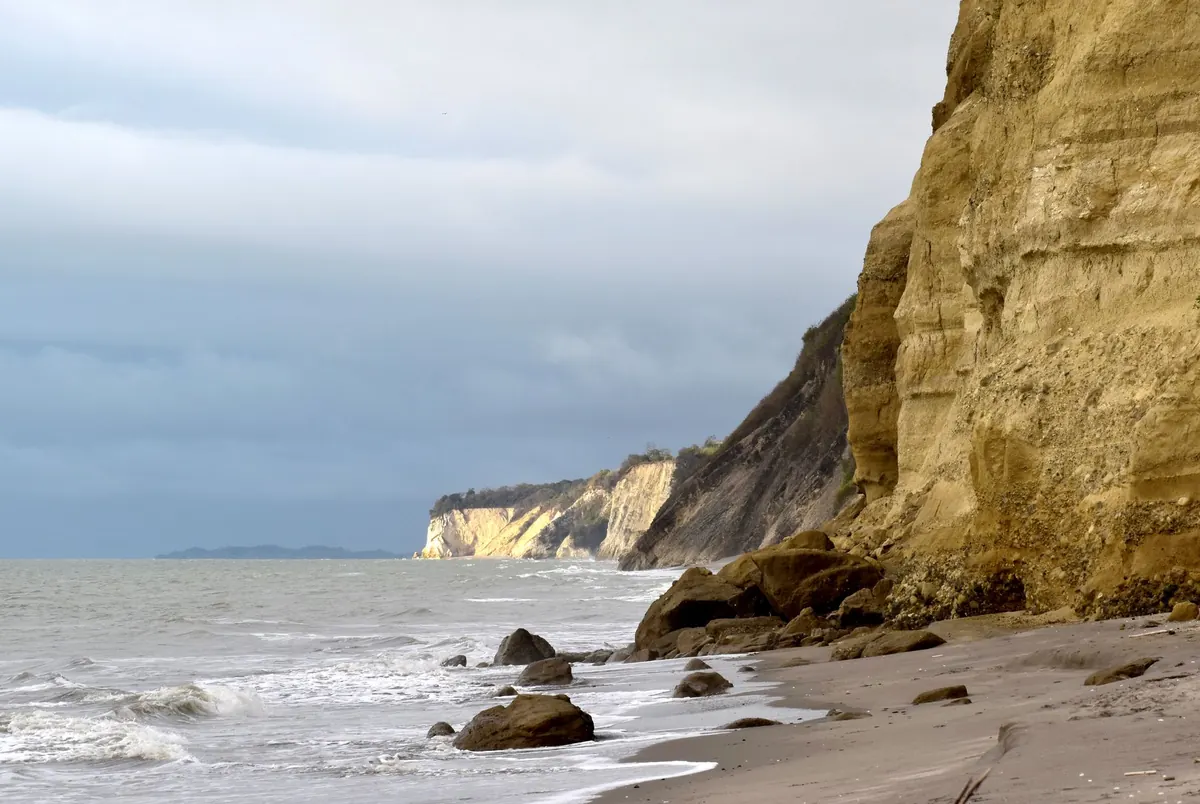
Coastlines do not retreat at a steady, predictable pace. Soft cliffs of boulder clay and glacial till can lose several metres in one storm season, then hold for years. Hard rock cliffs may shed a few centimetres a decade, but in sudden falls. Dune systems shift with the wind. Low-lying coastal plains and estuaries erode from the seaward side while also dealing with rising water levels and tidal scour.
Erosion is not the same as flooding
They are often lumped together, but they behave differently and are insured differently. Flooding is usually an event you can recover from; erosion is permanent loss of land. A property can sit comfortably above flood level and still be losing its garden. Ask specifically about erosion, and expect a blank look if you only ask about flooding.
The maps and plans worth reading before you offer
You do not need to be a coastal engineer to get a decent picture. Start with the documents that already exist for the stretch of coast you are considering.
- Shoreline Management Plans (SMPs) divide the coast into stretches and set a policy for each: Hold the Line, Advance the Line, Managed Realignment or No Active Intervention. Policies are given for three periods, roughly the next 20 years, 20 to 50 years, and 50 to 100 years. A change from Hold the Line to No Active Intervention in the medium term is a serious flag for a property close to the edge.
- Environment Agency flood risk maps and coastal erosion mapping, plus the evidence base your local council publishes alongside its local plan.
- Coastal Change Management Areas (CCMAs), where your council has identified a shoreline likely to change significantly. These designations affect what you can build and, in practice, how easily you can sell.
- Defence records. Find out who maintains the sea wall, groyne or rock armour near the property, and whether that maintenance is funded long term. Defences have a design life and a maintenance bill; a wall that looks solid today may not be replaced.
What a survey will and will not tell you
A standard building survey looks at the structure, not the coastline. It may note cracking or movement in the building, which can be a useful clue, but it will not normally assess cliff stability or the rate of shoreline retreat. If the property sits close to a soft cliff or a dune edge, commission a specialist coastal or geotechnical report. It costs money and takes time; it is also the only way to get a considered view rather than a guess.
Do some historical detective work yourself. Compare old Ordnance Survey maps with current ones. Look at aerial photography and satellite imagery from previous years, which is widely available, and check local archive photographs of the seafront. A pub, church or coastguard station that once stood between the property and the sea tells you a great deal. Talk to people who live there: farmers, harbour staff, the local coastguard, the parish council. Residents usually know which winters did the damage.
Insurance: the gap most buyers miss
Buildings insurance generally covers sudden events, such as storm damage, and typically excludes gradual processes, including erosion and long-term ground movement. The government-backed Flood Re scheme helps with flood cover for many homes, but it addresses flooding, not erosion, and it does not apply to every property.
So confirm insurability early, in writing if you can, and check whether any exclusion applies to the property's location or history. A lender is unlikely to proceed without cover, and a future buyer will ask the same question you are asking now.
Planning rules and what you may not be allowed to do
In Coastal Change Management Areas, councils restrict new development and may refuse extensions, replacements or conversions that would put more people or value in harm's way. Where permission is granted, it can be time-limited or conditional on the building being removed at the end of its useful life. Permitted development rights are sometimes withdrawn in these areas, which means work that is normally straightforward may need a full application. If your plans involve extending, rebuilding or converting, speak to the local planning department before you make an offer, not after.
A practical checklist before you commit
- Read the SMP policy for the frontage, including the medium and long-term epochs.
- Check the council's local plan, CCMA designation and any coastal erosion evidence for the site.
- Find out who owns and maintains the defences, and how they are funded.
- Ask your conveyancer whether coastal erosion is covered in the searches and reports, and request a specialist report if it is not.
- Commission a coastal or geotechnical assessment where the property is close to a soft cliff, dune edge or eroding foreshore.
- Confirm with an insurance broker that cover is available and note any exclusions.
- Ask the seller directly about erosion, repairs, drainage and any past insurance claims, and get the answers in the property information form.
Weighing the view against the risk
Some of the most sought-after homes in Britain sit on coasts that are, quite literally, on the move. That does not automatically make them bad buys. A property on a defended frontage with a Hold the Line policy and a healthy maintenance budget is a different proposition from one at the end of a lane above a soft cliff with no defence and no plan. The trick is to price the risk into your thinking rather than discover it later, and to accept that an eroding coast may affect mortgage availability, insurance terms and resale as much as it affects the building itself.
Take advice from a solicitor and a chartered surveyor who know the local coastline, and be prepared to walk away if the reports do not stack up. There will always be another house with a sea view. There is only one cliff edge.
Photo: Antonio Mena / Pexels
Related posts
More stories you’ll love reading