
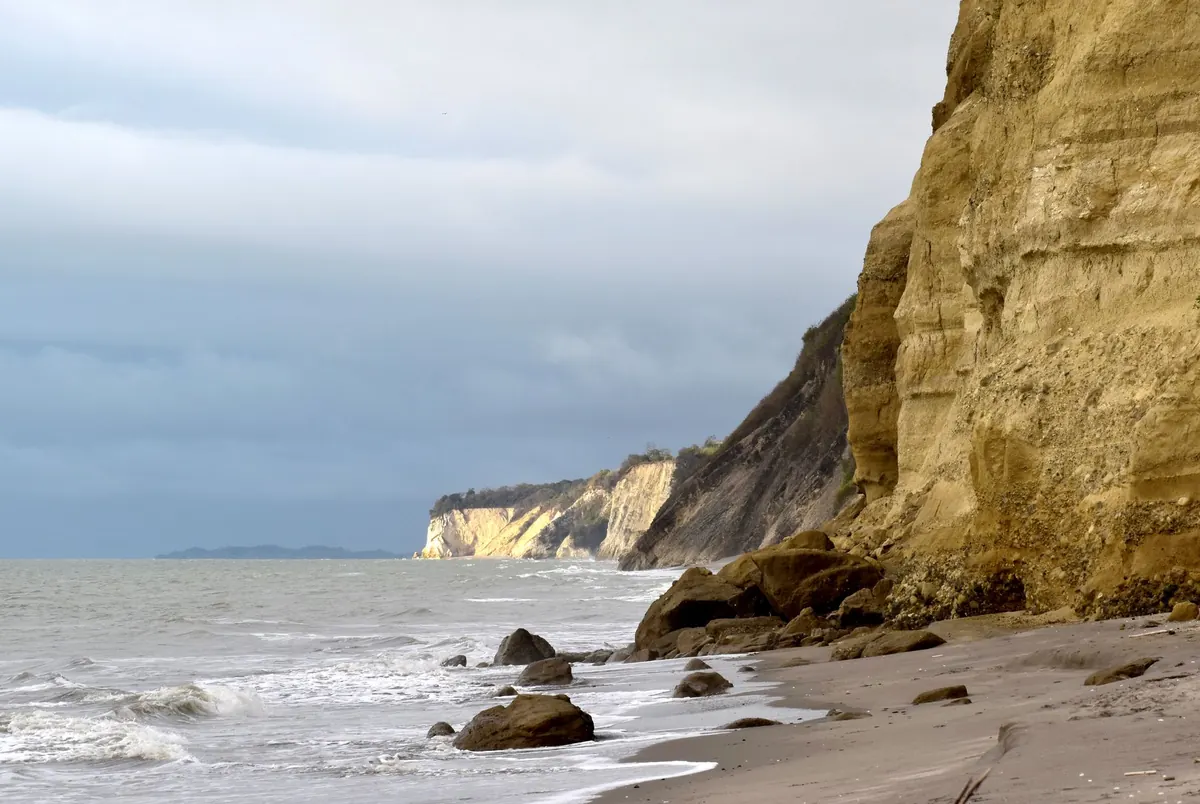



A car makes the coast easy. It also flattens it: you park behind the promenade, walk twenty paces, buy an ice cream and drive home with sand in the footwell. Arrive by train, bus or on foot and the place unfolds differently. You notice the harbour wall because you walked along it. You hear the gulls at half past five because your guesthouse window is open.
Planning a car-free seaside trip in the UK comes down to three things: timetables, tides and luggage. Get those right and the rest is sitting still with a book while the light changes.
Choose a resort where the station is the town
Start with the map and one question: how far is the last mile? Plenty of British seaside towns put you within a few minutes' walk of the water — St Ives, Cromer, Llandudno, Tenby, Whitby, Falmouth, Deal, Bridlington. Others keep the railhead inland and ask a bus to finish the job: Saxmundham for Aldeburgh, Halesworth for Southwold, Bodmin Parkway for Padstow and Wadebridge.
Sort your shortlist by the walk from arrival point to seafront rather than by photographs. A workaday town where the bus stops at the harbour beats a prettier one where the final three miles need a taxi each way.
Read the timetables backwards, then forwards
Begin with the return journey. Find the last sensible train or bus of the evening, then build the day around it. Coastal services thin out sharply after dark, and Sunday can be close to nothing on rural routes. Before you book, check:
- Seasonal services. Many summer buses, foot ferries and beach-side routes run from Easter or May until September only.
- Engineering works. Weekend closures on the rail network are common and usually add a rail replacement bus, which takes longer than the train it replaces.
- Connections. A ten-minute change is comfortable if the trains share an operator and a platform, and hopeless if they do not.
- Ticket type. Advance tickets are cheaper but tied to one train; a flexible ticket is worth the extra when a bus link is involved, because buses do not wait for delayed trains.
- Add-ons. PlusBus and regional rover tickets, where available, can cover local buses for a flat rate.
Screenshot everything. Signal in a cove, or on a coastal path, is unreliable just when you want to check whether the 16:40 stops at the top of the hill.
Pack like you are carrying it, not parking it
Luggage shape matters more than weight. Cobbles, steep lanes and narrow pavements make a four-wheeled case a nuisance, while a rucksack or a two-wheeled case with generous wheels copes better. Everything you bring gets carried from platform to bus to guesthouse, often uphill.
- One main bag you can carry for fifteen minutes without needing to stop.
- A small day bag that folds flat, for beach days and short walks.
- A waterproof jacket, plus a dry bag or a couple of plastic bags for wet swim kit.
- Layers, sun cream and a hat. Coastal weather changes quickly in both directions.
- A power bank, and a printed copy of bookings and timetables.
- A reusable water bottle. Refill points are easier to find than you might expect.
Station left-luggage offices have largely disappeared, so plan around them. Hotels and guesthouses will usually hold bags before check-in and after check-out, and a few cafés and shops near the front offer paid bag drops. Ask when you book rather than on the day.
Plan around the tide, not just the forecast
Tide tables matter, especially on foot. Some stretches of coast path are passable only near low water, and a few headlands have no alternative route once you have committed to them. Take the times from the harbour office noticeboard, a printed tide table for the area or the Admiralty's online predictions, and treat high water as a fixed appointment.
Habits worth keeping
- Check the tide before a beach walk, a ferry crossing or a long paddle, not after.
- Foot ferries often stop running on a falling tide; ask the operator what the last crossing really is.
- Ask locally about the state of the path. Storm damage and landslips can close sections for months.
- Tell someone your route and your expected return time, and take a charged phone.
For anything involving cliffs, swimming or remote stretches, follow local coastguard and harbour advice, and turn back earlier than you think you need to.
Getting about once you are there
You will need less than you expect. Local bus day tickets are usually the best value for hopping between villages, taxi numbers are worth saving for the one evening when the bus has gone, and coastal path sections often link places that no road serves well. Bike and e-bike hire exists in many resorts, and the flat former railway lines behind towns such as Cromer or Whitby make for easy riding.
Ferries are the pleasure of a car-free trip: cross an estuary for the price of a coffee and arrive somewhere that feels a world away from the road.
When plans slip
Assume one thing will go wrong. Know your fallback before you need it: a later train, a bus that runs a different way, a taxi number with an idea of the fare, or the name of a pub with rooms. Build slack into the day rather than booking the last bus and the last train an hour apart on a Sunday in October. A missed connection in a seaside town is a minor inconvenience; a missed connection with nowhere to sleep is a different evening altogether.
The five-minute routine before you go
- Write down your return times, including the last bus, and keep them offline.
- Check tide times for the days you plan to walk, cross water or explore a headland.
- Book Advance tickets where the journey is fixed, flexible ones where it is not.
- Download offline maps of the town and the coast path nearest to it.
- Confirm with your accommodation that they will hold bags early and late.
- Save two local taxi numbers to your phone.
Then put the phone away. The whole point of arriving without a car is that the day runs to the rhythm of trains, tides and your own feet — and that is a timetable worth keeping.
Photo: Erika LU / Pexels
Related posts
More stories you’ll love reading